Beginning Again
Beginning again is not a moment of courage. It is a daily agreement with uncertainty.
Most new beginnings are not chosen; they are the aftermath of an implosion. One minute, the future feels structured and certain, like a road we have carefully mapped out for ourselves, and then something shifts. Plans unravel. The narrative dissolves. The life we imagined, the one we had slowly and deliberately begun to inhabit, suddenly becomes something we have to grieve.
I think there is a particular kind of grief reserved for futures that never happen. It is not only the grief of losing something that existed in the world, but the grief of losing something that existed within us. A friend recently asked me, “What do I do with all these hopes I had for a future that won’t ever happen anymore? Where do they go?” The answer is simple, and unfortunate: they keep existing. And when the ground beneath you gives away, it is not only the imagined future that disappears, but it’s also the life that had quietly formed around it — the house that was made into a home, the restaurants that were returned to without thinking, the small routines and familiar places that made the future feel real. People often talk about “starting fresh,” as though beginning again were some kind of invigorating reset. But beginning again doesn’t always feel invigorating. Most of the time, it feels exhausting.
And yet, beginning again is one of the most human things we do. Again and again in our lives, we are asked to rebuild from places we never expected to find ourselves. We are expected to let go of stories we thought had already been written, and walk forward without the certainty we once depended on. Through the ambiguity, fragility, and unanswered questions, we are asked to radically accept that we do not know what comes next.
So, that’s where I find myself. Radically accepting the rebuilding of routines, identity, and expectations.
In radically accepting, something new appears. Freedom. This is the paradox of beginning again. There is both defeat and possibility. There is trepidation and optimism. There is grief and movement. Beginning again asks you to mourn what was lost while slowly (and at times, very reluctantly) making room for what might still be waiting.
Perhaps that is all beginning again really is — not a dramatic moment of reinvention, but a series of quiet decisions to continue; to accept that the future will not look the way we once imagined; to carry the grief of that realization without letting it close the door on what might still be possible. And in time, beginning again stops feeling like survival and starts to resemble living. Slowly, almost imperceptibly at first, new things begin to take root. New friendships appear. New cities and countries open themselves to you. New relationships demand to be explored. Each new experience reminds you that the world is wider than the life you once thought you had lost.
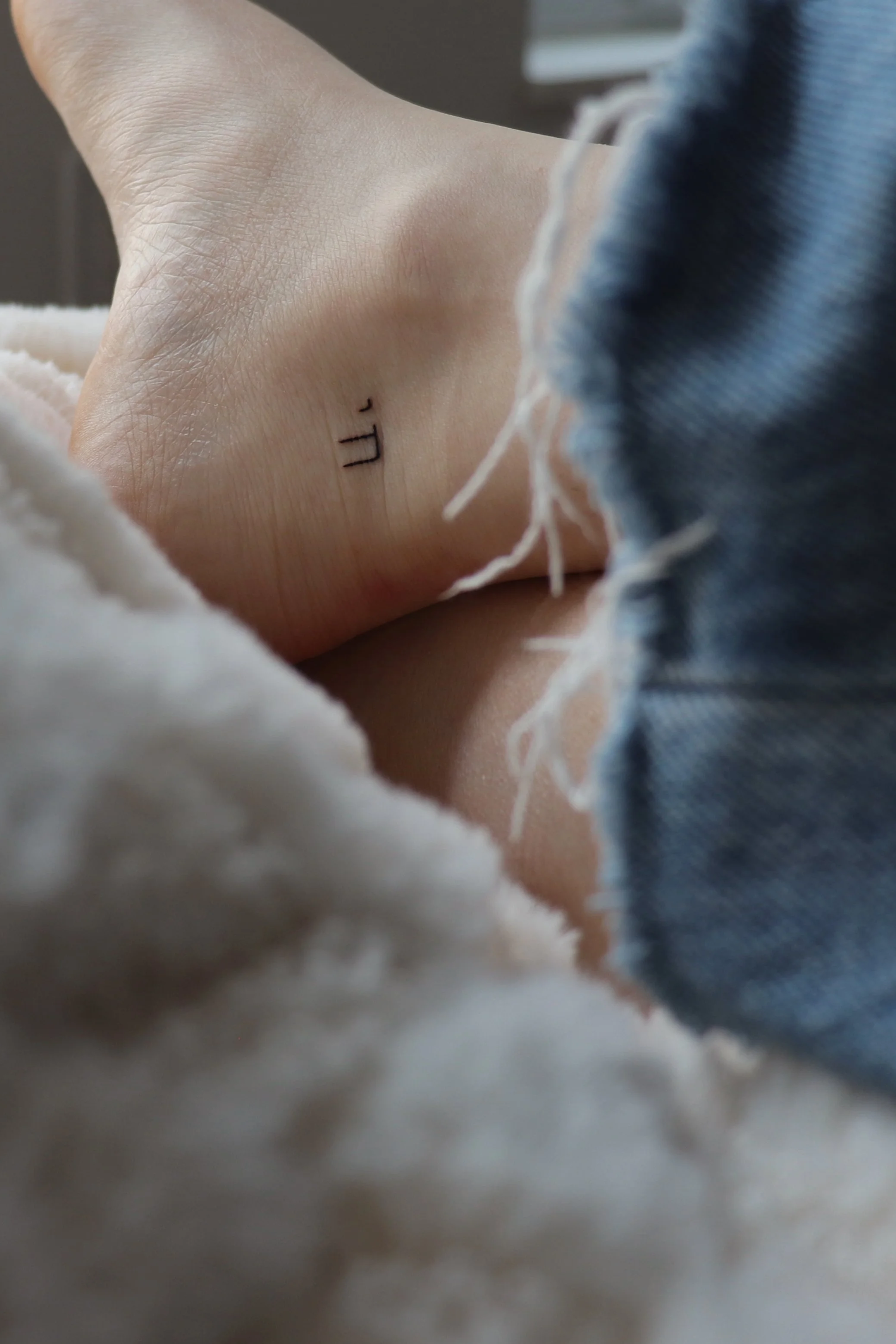
There is a Hebrew sentiment that I believe captures this better than anything else: chai — life. Beyond its literal translation, chai represents resilience, vitality, renewal, and continuity. To begin again successfully is not to recreate what was lost, but to choose chai, and to step back into living with an open heart, even after grief has rearranged the landscape. It is the conscious decision we must make to remain present for the friendships still waiting to form, the places still waiting to be discovered, and the people still waiting to love us.
Beginning again, at its core, is an act of unwavering faith in life itself. It is the belief that even after everything falls apart, life is still waiting for us to say yes to it.